Anglican Church of Melanesia (ACOM)
Guardians of the Land and Sea:
Freda’s story
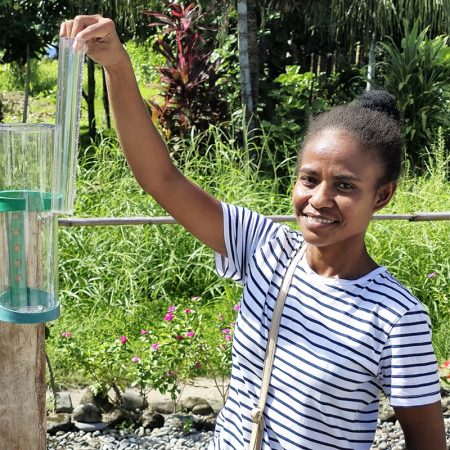
Freda Fataka, ACOM’s Environmental Observatory Coordinator, is a guardian of the land and sea. Determined and hopeful, Freda believes deeply in the power of people to reshape their future. “We can become an agent of change to others,” she says. “We have the knowledge, we have the skills.”
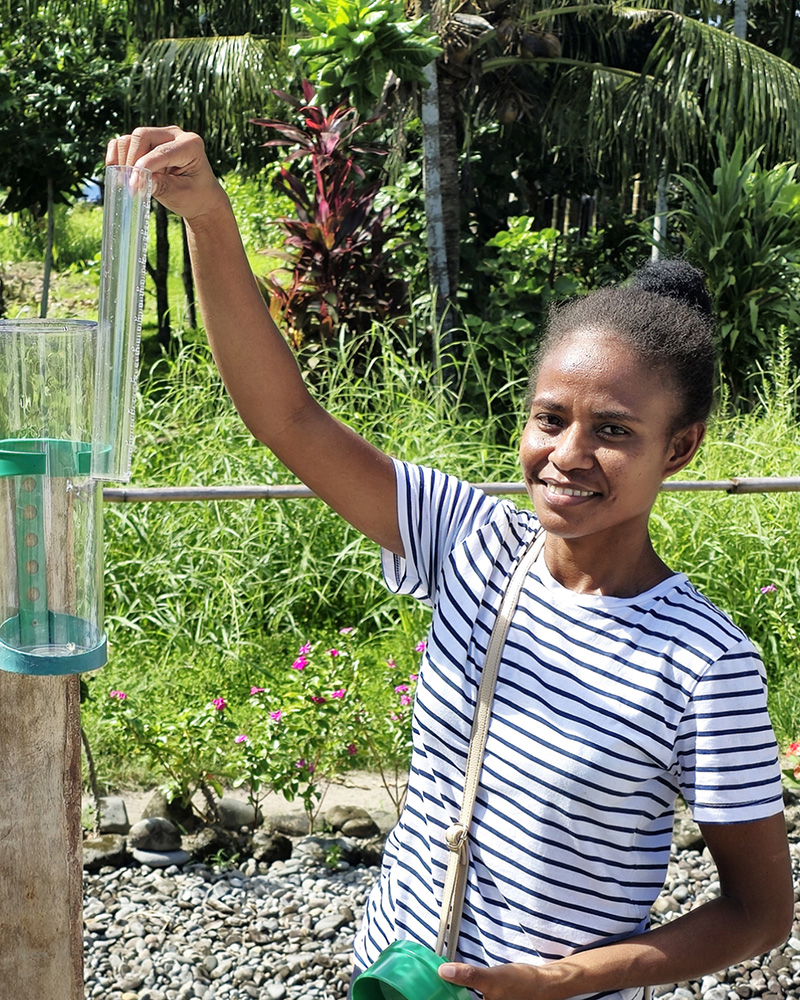
ACOM’s Freda Fataka checks the rain gauge at Panueli, Savo Island. “I have a passion for caring for nature,” she says. “I know that God created us, so we too need to be good stewards of Creation.” © ABM/ Isabel Robinson.
Freda leads a network of 16 environmental observatories spread across the islands. Their work is simple yet profound: gathering the data that shows how quickly the climate is changing. On Savo Island, at Paibeta Community High School, she trains teachers and students to measure temperatures, track rainfall and monitor rising seas. “Data is important for evidence purposes to the government,” she explains. “It helps us see with the naked eye all the changes that are happening.”
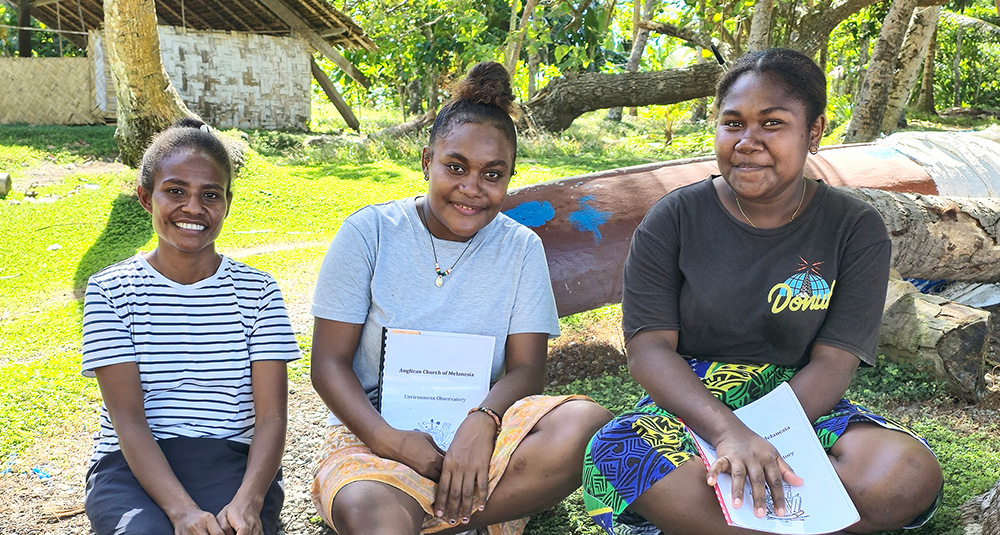
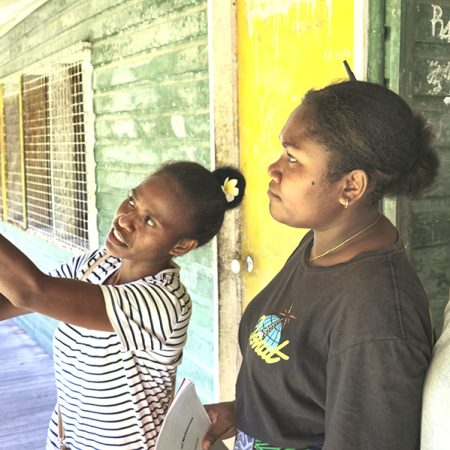
ACOM’s Freda Fataka (left) coordinates a network of 16 environmental observatories around the Solomon Islands, including one at Paibeta Community High School on Savo Island. “Data is important for evidence purposes to the government,” she says. “It helps us see with the naked eye all the changes that are happening.” © ABM/ Isabel Robinson.
Her passion is rooted in her faith. “I have a passion for caring for nature,” she says. “I know that God created us, so we too need to be good stewards of Creation.”
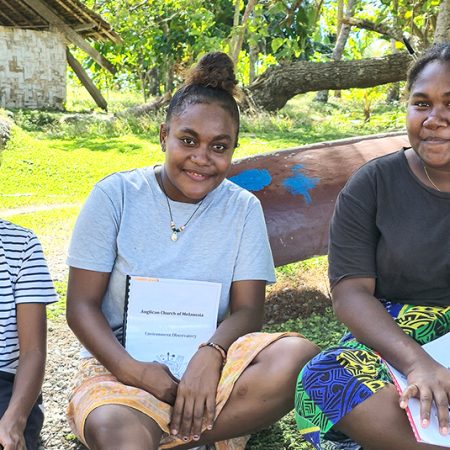
Among Freda’s eager students are Margreth and Christalyn, who stand under the island sun with notebooks in hand to record the changes. Margreth’s favourite subject is science. She says, “I have learned how to record scientific data. Documenting this helps me understand about climate change. I feel sad that the shoreline is washing away.”
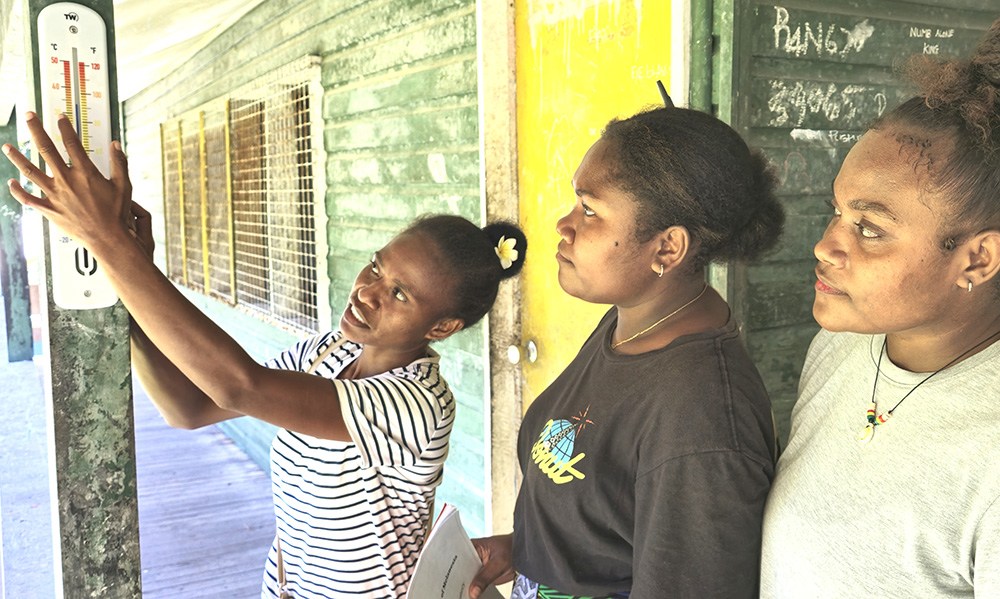
ACOM’s Freda Fataka (left) showing secondary students Margreth and Christalyn how to take temperature readings. Margreth (centre) says her favourite subject is science. “I have learned how to record scientific data,” she says. “Documenting this helps me understand about climate change. I feel sad that the shoreline is washing away.” © ABM/ Isabel Robinson.
Our Partner – the Anglican Church of Melanesia
ABM AID partners with the Anglican Church of Melanesia (ACOM) in both the Solomon Islands and Vanuatu. The church has eight dioceses in the Solomon Islands and two covering Vanuatu and New Caledonia.
In the Solomon Islands, the Anglican Church is the largest Christian denomination and comprises 32% of the people in that country. Through its seven dioceses, the reach of ACOM throughout the whole of the Solomon Islands is extensive.
ABM has a long history with the Anglican Church of Melanesia. In fact, the first activity of the newly created “Australasian Board of Missions” in 1850, was to fund the construction of a boat to support the work of the Melanesian Mission. This boat was commissioned in 1857 and named the Southern Cross. In 2024 the tenth “Southern Cross” was launched in the Solomon Islands. This boat continues in the wake of its forebears to carry out ACOM’s mission.
The Work We Support
1. Climate Change and Disaster Management in the Solomon Islands
ABM AID collaborates with ACOM in the Solomon Islands to tackle the pressing challenges of disaster preparedness and climate change. Together, they help communities strengthen their resilience by planting trees and building sea walls to defend coastlines from rising seas, by establishing demonstration gardens to improve food security, and by hosting community awareness sessions on hygiene (often paired with new water tank installations), disaster readiness, and positive parenting workshops. Their work also includes gathering vital climate data, with local teams monitoring sea levels, rainfall, and temperatures across the islands to better understand and respond to a changing environment.
A lot of people within ACOM are working hard to collect data and take action to mitigate against the effects of climate change.
In Honiara, a garden becomes both a classroom and a symbol of resilience. At St Nicholas’ Anglican College, students take their learning even further.
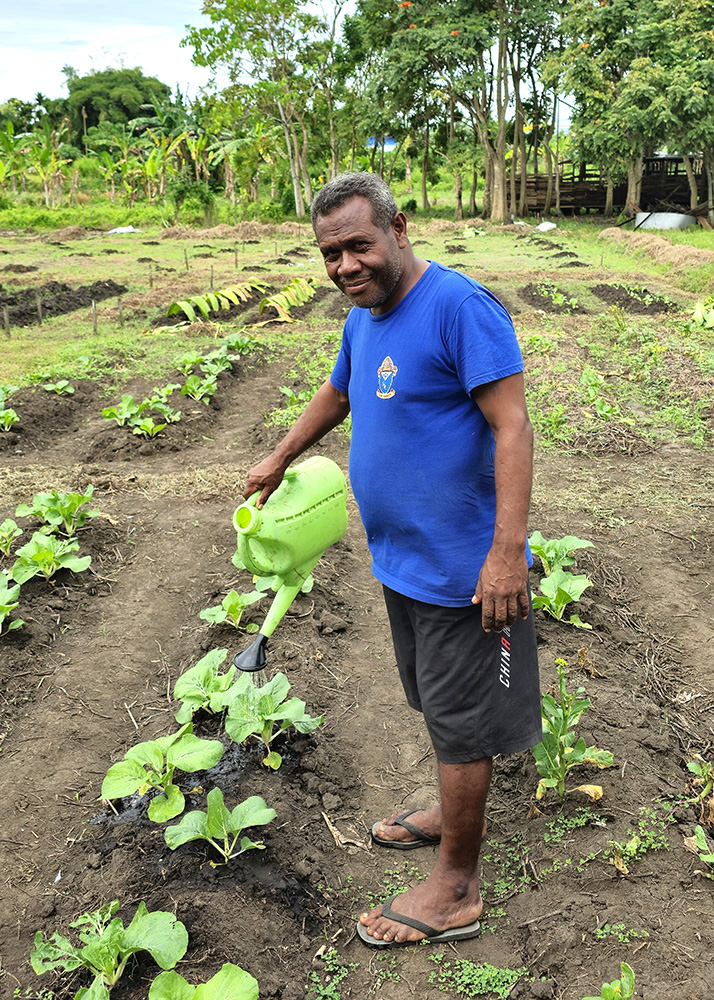
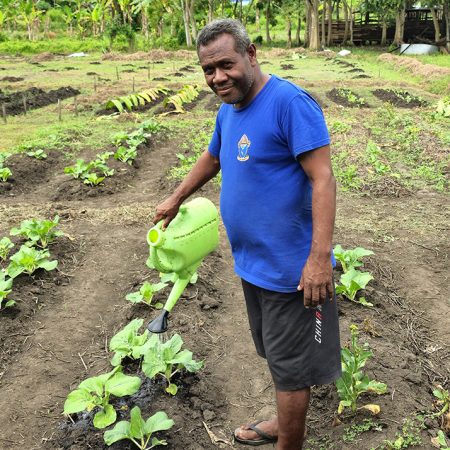
At this sustainable farm in Honiara, students from St Nicholas Anglican College participate in a nine-week practical placement, taught by farm manager Chris Bugoro. “Students are involved in every aspect of the planting cycle,” says Chris, “from sewing of seeds to mulching, weeding, harvesting and selling.” © ABM/ Isabel Robinson.
Farm manager Chris Bugoro guides them through a nine‑week environmental placement. “Students are involved in every aspect of the planting cycle,” Chris says, “from sowing of seeds to mulching, weeding, harvesting and selling.” The garden becomes both a classroom and a symbol of resilience.
This is a story of courage, stewardship and hope. It is the story of Solomon Islanders who refuse to give up on their land, their future or the sea that sustains them.
2. WASH and Literacy and Numeracy in Vanuatu
ABM AID’s other work with the Anglican Church of Melanesia takes place in Vanuatu and involves Water, Sanitation and Hygiene work as well as Adult Literacy and Numeracy training.
By June 2025, ABM AID and the Anglican Church of Melanesia in Vanuatu (ACOM V) had reached 4,387 people through a water, sanitation and adult literacy program.
The literacy component of the program involves 22 volunteer teachers and 258 students spread across ten islands. Size did not reflect impact.
In the village of Wasaka, fourteen young people who had once left school early returned to formal education after gaining confidence through adult literacy classes.
In Merelaen, one woman living with a disability described how these classes had reshaped her world. “I have been able to take part in … Bible readings in church and community discussions. I am no longer scared and do not feel left out.”
Her words echoed those of many learners: Learning to read and write was unlocking dignity, participation and possibility.
While literacy changes lives in quiet, personal ways, the water, sanitation and hygiene (WASH) activities reached even further. From 2021 to 2025, ACOM V had installed 24 water supply systems, from rainwater tanks to piped spring systems. They also built 37 model latrines with ventilation pipes, helping communities adopt safer sanitation practices.
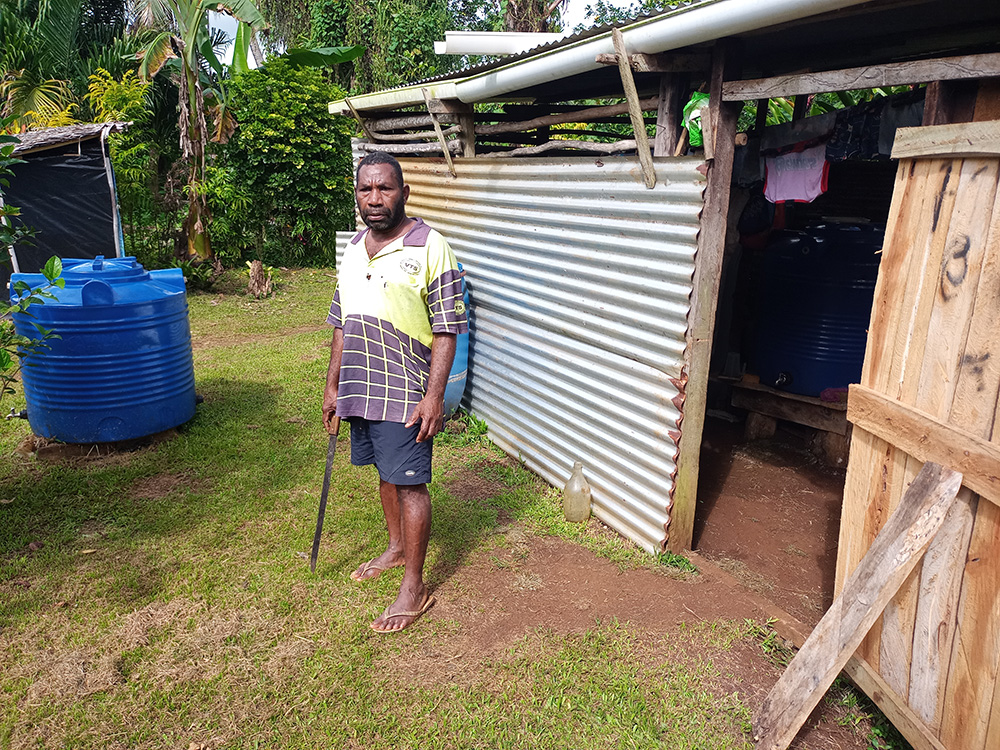
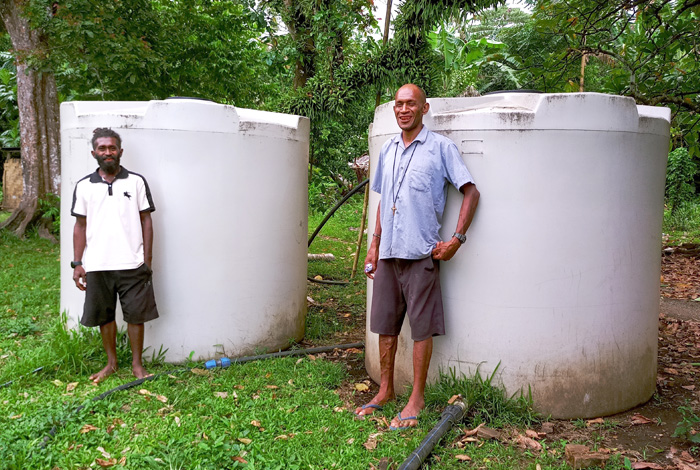
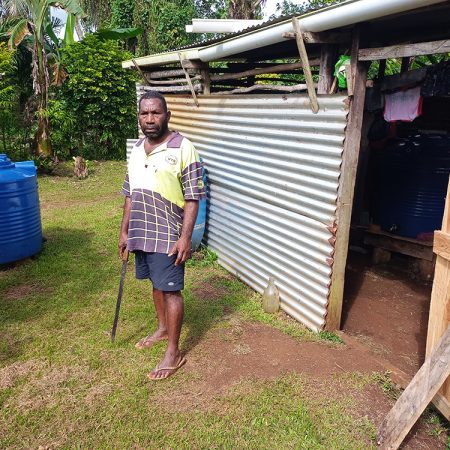
Fr Willie Loli, parish priest at Revelco on Santo Island in Vanuatu, with two 500-litre water tanks (one in the shed), both intended for use by people living with disabilities. © ABM/ Terry Russell.
The entire program, even the hygiene messaging, is shaped with local customs and needs in mind. Communities saw their own knowledge reflected in the designs, which strengthened ownership and pride.
The program also makes a deliberate effort to ensure fairness. Women, young people, single women headed households and people with disabilities are prioritised. Many of the model latrines are installed at the homes of people with disabilities, ensuring they are not left behind.
In Torba, Penama and Sanma provinces, communities now have better water systems, stronger sanitation facilities and greater understanding of hygiene, disability inclusion and disaster readiness. Adults who had once felt excluded were reading, contributing and finding their voice. Families were drinking safer water. Entire communities were planning for the future together.
This work is a partnership of churches, villagers, teachers, volunteers, supporters and the Australian Government working side by side to strengthen life across the islands.
ACOM Vanuatu’s WASH and Literacy program receives support from the Australian Government through the Australian NGO Cooperation Program (ANCP).
More information about The Solomon Islands and Vanuatu
The Solomon Islands is a beautiful archipelago in the South Pacific Ocean, to the east of Papua New Guinea.
Lush tropical rainforest engulfs many of these islands, and adventure-seeking tourists come to explore extinct volcanos, snorkel the pristine coral reefs, or investigate the many WWII wrecks scattered through the jungle and sea.
For the 800,000 people who call the Solomon Islands their home, however, there are many challenges living in this tropical oasis.
Climate change is having a tangible impact on the natural environment, increasing the frequency of severe cyclones and strong storm surges. Rising sea levels have already claimed six of the islands, forcing inhabitants to abandon their homes and seek refuge on neighbouring lands and have led to inundation of gardens and communities (including even burial sites) on other islands. With 5,313 km of coastline throughout the country, this phenomenon appears as an ever-present risk for the majority of Solomon Islanders, a fact that is often expressed to newcomers with the utmost gravity.
With the growing strain on livelihoods from depleted fish stocks, deforestation, and the salinization of arable land, an increasing number of young people are moving to the capital city of Honiara. Despite optimistic hopes for stable work and decent income on the main island, many are disappointed when they arrive. Two-thirds of the population live in conditions of vulnerable employment. About one-quarter of the population lives below the country’s official poverty line.
An estimated 15% of people in the Solomon Islands live with a disability. People with disabilities are even more vulnerable to the impact of natural disasters and the many challenges of poverty.
Vanuatu covers over 1,000 kilometres of the Coral Sea. Its 83-islands are home to 270,400 people, the vast majority of whom live in rural areas outside the capital city of Port Vila. On these remote islands, subsistence farming and fishing are often the only ways to survive, and there are few services providing health, education, water, or electricity.
The United Nation has ranked Vanuatu as the world’s most at-risk country in terms of vulnerability to natural disasters and ability to recover, and it experiences frequent cyclones along with earthquakes, tsunamis, and volcanic eruptions.
As the country is made up of many low-lying islands, it is also feeling the effects of climate change, with rising sea levels causing land and water degradation. With only 68% of the population engaged in the formal economy, these challenges are placing an enormous strain on rural families trying to meet their own basic needs.
A Prayer for our Partner
Loving God of earth and ocean, you call your Church to watch, to learn, and to act. Bless the work of climate care in the Solomon Islands – the careful keeping of records, the planting of trees, and the building of shelter against rising seas. Refresh dry land with rain in due season. In Vanuatu, deepen knowledge and wisdom: strengthen the provision of clean water, nurture right habits, and open minds through learning. May communities discover their gifts and flourish in dignity, resilience, and hope. We ask this in the holy Name of Jesus Christ our Lord.
Amen.
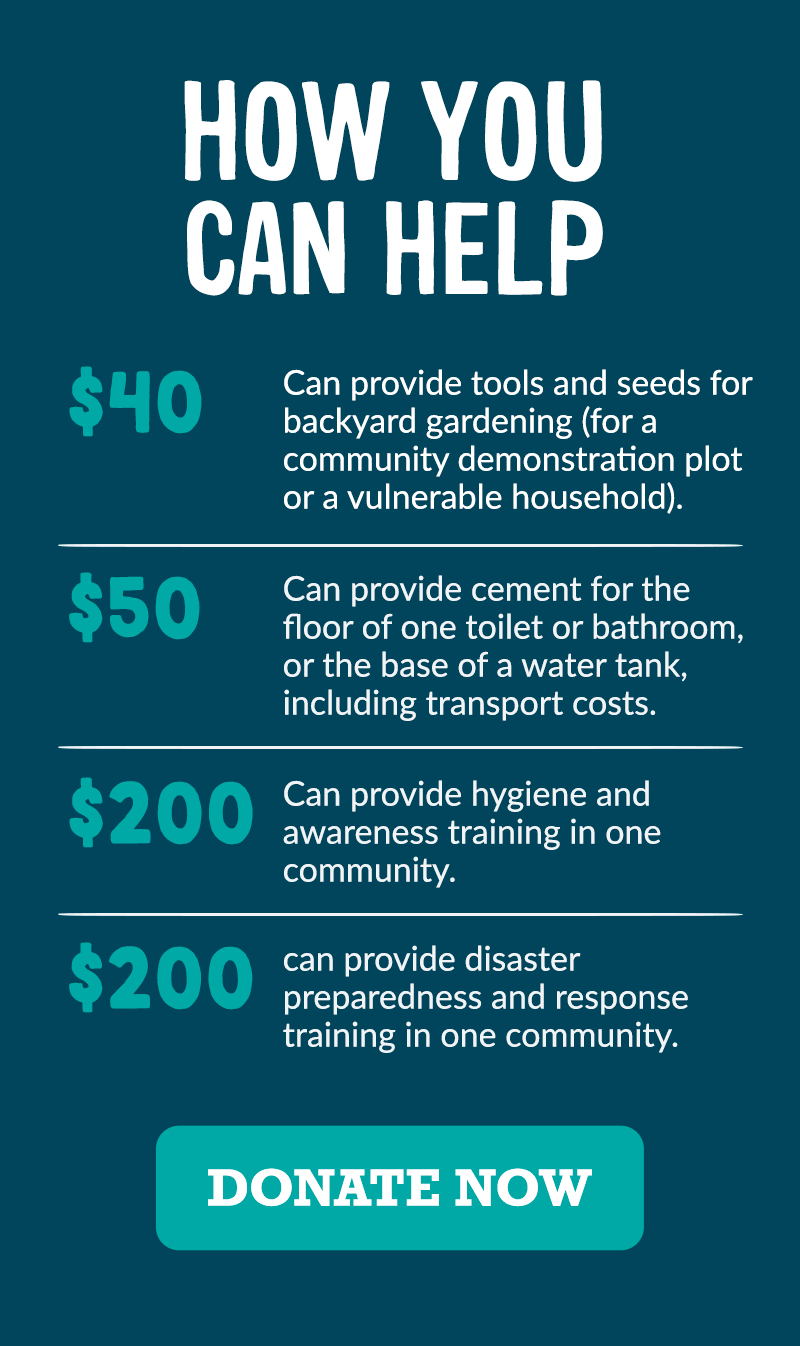

Your support fuels programs that transform lives, helping Pacific communities grow stronger, healthier and more resilient in the face of climate challenges. Stand alongside ACOM and AID as we work to address the urgent needs of our region.
We hope to raise
$115,000
for this partner
Donation code: XG011
Tax-deductible
Donate Online Now
You can support the Anglican Church of Melanesia to empower communities in the Solomon Islands and Vanuatu to be stronger, healthier, and more resilient.
Click here for other donation options
Need help? Call us 1300 302 663
As noted, this is a tax-deductible project. All donations are in Australian dollars (AUD) and all gifts of $2 or more are tax-deductible. Gifts are received by the trustee for the ‘Anglicans in Development Ltd’ ABN 86 647 293 481 Gifts will be applied to the support of projects selected. In the unlikely event of projects being oversubscribed or not proceeding to completion, donations will be applied to similar projects.
Updates
From “Come and Do” to “Come and See” – why ABM pilgrimages are changing for the better.
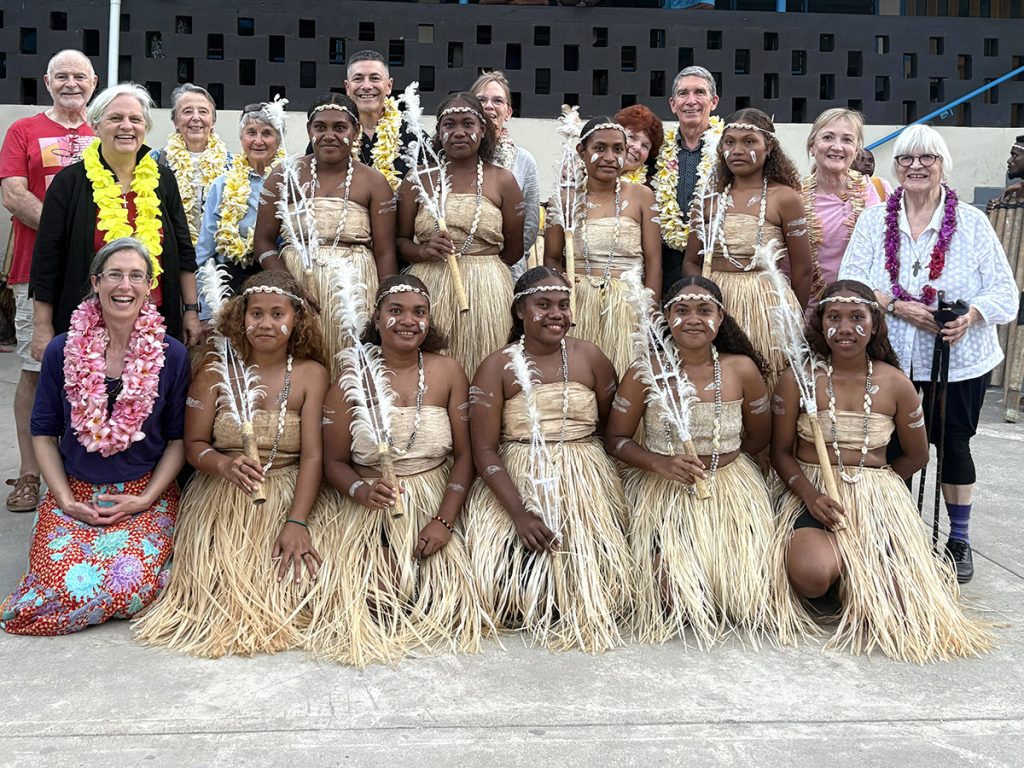
What is a pilgrimage? 13 Australian Anglicans found out first-hand during ABM’s pilgrimage to the Solomon Islands in July 2026. Read how this experience lead them into a deeper understanding of how God is at work through the Anglican Church of Melanesia.
How did Ray, with no formal education, become so respected in Wasaka?
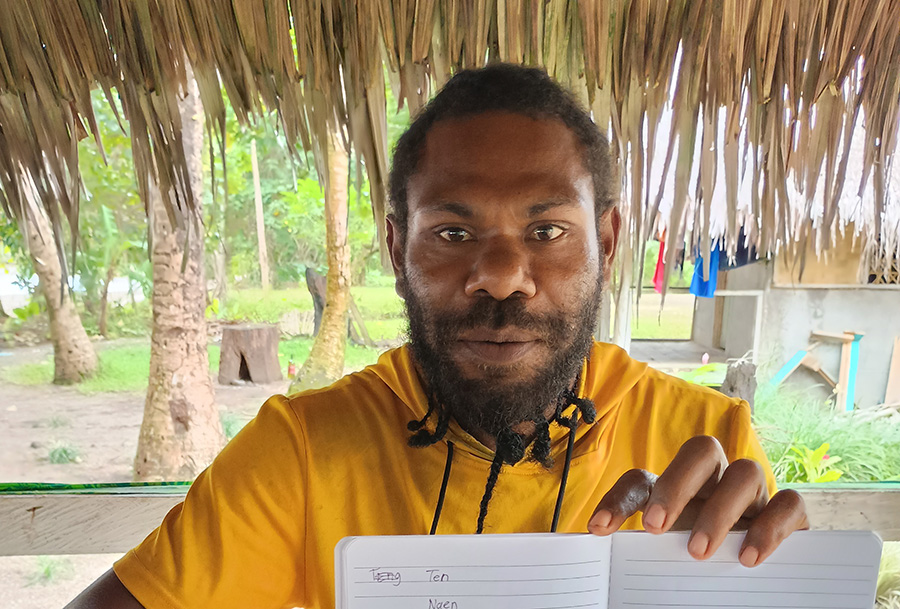
Read this story of how donations to our Adult Literacy program transform people’s lives, giving dignity and a brighter future.
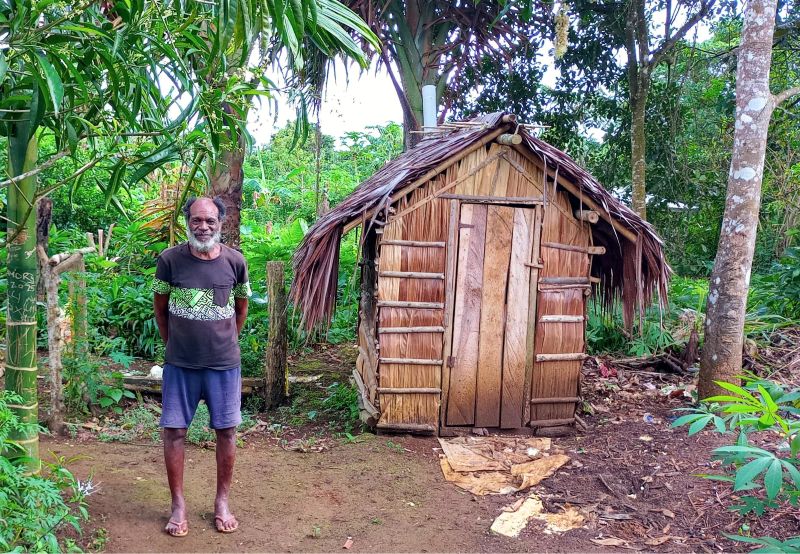
“I am no longer scared and do not feel left out”: evaluation finds water, hygiene and literacy work empowering thousands across Vanuatu
When you’re running a water, sanitation and adult literacy program across ten islands in Vanuatu, you need to pause occasionally to get some independent feedback. Were the program design and implementation yielding results? The answer is yes.


